
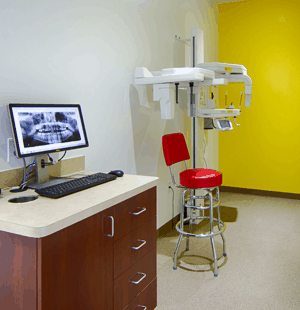
What Technology Do Modern Orthodontists Use to Plan Treatment?
Modern orthodontists use intraoral scanners, CBCT 3D imaging, AI-powered planning software, cephalometric analysis, and 3D printing to plan treatment with precision. These tools work together to map every tooth movement digitally before braces or Invisalign treatment begins, replacing guesswork with data-driven treatment design.
If you've been wondering what technology modern orthodontists use to plan treatment, the answer starts with a fundamental shift. Instead of relying on messy putty impressions and manual calculations, orthodontists now capture precise digital data using specialized software, imaging, and scanning tools. You get a complete picture of your teeth, roots, jaw, and bite, all mapped before treatment starts.
What Is Digital Orthodontic Treatment Planning?
This shift from analog to digital has changed everything about how orthodontic care works in League City, Spring, Pearland, Cypress, and across the Houston metro area. Treatment plans aren't based on educated guesses anymore. They're built on measurements accurate to fractions of a millimeter, analyzed by software that predicts how teeth will respond to specific forces over time.
Think about what this means for you. Before a single bracket is placed or aligner is worn, your Board Certified Orthodontist sees exactly where each tooth needs to go. Potential challenges get identified early. Your plan accounts for them. And you actually see what your smile will look like when treatment is complete.
Digital orthodontic treatment planning includes several key components working together:
Intraoral Scanners
Intraoral scanners replace traditional impressions with a small wand that captures thousands of images per second. What you get is a detailed 3D model of your teeth that's far more accurate than any putty mold could ever be.
CBCT Imaging
CBCT (cone beam computed tomography) provides a full 3D view of your entire oral structure. Unlike flat X-rays, CBCT shows the position of tooth roots, bone density, airway dimensions, and jaw joint anatomy all at once.
Cephalometric Analysis Software
Cephalometric analysis software measures the relationships between your teeth, jaws, and facial structure. These measurements inform decisions about how to achieve both functional bite correction and aesthetic improvement.
AI-Powered Planning Tools
AI-powered planning tools analyze digital records and suggest optimal treatment approaches. Software draws on large databases of treatment outcomes to help predict what will work best for a specific situation.
3D Printing and Robotic Fabrication
3D printing and robotic fabrication turn digital plans into physical appliances. Custom brackets, precision-bent wires, and perfectly fitted aligners are all manufactured based on exact digital specifications.
Whether you're considering braces or Invisalign, treatment begins with thorough digital records that inform every decision along the way.
A unique combination of art and science that defines modern orthodontics depends on this technology. Clinical expertise guides the treatment goals, while digital tools provide the precision needed to achieve them efficiently and predictably.
How Modern Orthodontic Technology Works: From Scan to Smile
Here's what happens behind the scenes during orthodontic care. Each step in this process turns an initial free consult into a complete treatment plan built around your specific anatomy.
How Do Digital Impressions Work?
Orthodontic records start with an intraoral scan. A small handheld wand moves around the mouth, capturing detailed images of every tooth surface. Structured light or laser technology builds a precise 3D model in real time.
You watch your teeth appear on a screen as the scanning happens. It takes just a few minutes and feels nothing like the gagging, messy experience of traditional putty impressions.
If the scan misses a spot, your orthodontist simply rescans that area rather than starting over completely. Undercuts, tight spaces between teeth, and subtle surface textures all show up clearly on the digital model. According to a 2017 study published in the American Journal of Orthodontics and Dentofacial Orthopedics, intraoral scanners achieve accuracy within 6.9 ± 0.3 microns, far exceeding what traditional impressions deliver. This accuracy matters because it directly affects how well aligners fit or how precisely brackets are positioned.
What Does CBCT 3D Imaging Reveal?
Intraoral scans show the crowns of your teeth beautifully, but they can't reveal what's happening beneath the gum line. That's where CBCT imaging comes in.
A CBCT unit takes a single rotation around your head, capturing hundreds of images that software reconstructs into a complete 3D volume. Your orthodontist then slices through this data in any direction, examining:
- Root length and shape for each tooth
- Bone density and volume around each tooth
- Position and health of jaw joints (TMJ)
- Airway dimensions and any restrictions
- Developing teeth in children and teens
- Proximity of teeth to nerves and sinuses
Why does this matter so much? A tooth with a short root needs different force application than one with a long root. Thin bone on one side of a tooth affects how it can safely be moved.
CBCT reveals these factors before treatment begins, not after setbacks develop.
How Does AI Help Analyze and Simulate Treatment?
Once digital records are complete, specialized software goes to work. AI algorithms analyze scan data against large databases containing outcomes from thousands of previous cases. Patterns emerge. Approaches get suggested based on what has worked for similar situations.
Your orthodontist reviews these suggestions and begins building a custom treatment plan. Using digital tools, they can:
- Move individual teeth on screen and see how the bite changes
- Test different sequences of tooth movement
- Identify potential collisions or interferences between teeth
- Calculate the forces needed to achieve specific movements
- Predict treatment duration based on the planned movements
Biomechanical principles are tracked automatically. If a planned movement would require excessive force or could damage root structure, the system flags it for review. This catches potential issues before they affect actual treatment.
Why Does the Orthodontist Still Review Every Plan?
Technology provides data and suggestions. But your orthodontist makes the final decisions. This is where clinical expertise and artistic judgment come into play.
They consider factors that software can't fully evaluate. How will the final result look with your facial features? What are your specific goals and concerns? Are there health factors that affect treatment options?
Sometimes a slightly different approach produces better results even if it's not the mathematically optimal path. Years of clinical experience with similar cases often make the difference between a good result and a great one.
Once finalized, the plan becomes the blueprint for your entire treatment. Every appointment, every adjustment, every aligner tray follows this carefully designed roadmap.
How Are Custom Appliances Fabricated from Digital Plans?
Here's where the digital plan becomes something you can hold in your hand. Finalized treatment specifications feed directly into manufacturing systems that create custom appliances.
For Invisalign patients: Digital plans specify exactly how each aligner should be shaped. Manufacturing facilities use 3D printing to create precise models, then thermoform aligner material over these models to produce custom trays. Each aligner is slightly different, designed to produce specific tooth movements in a specific sequence.
For braces patients: Custom bracket systems get designed based on digital records. Some practices use indirect bonding, where brackets are positioned on a model first and then transferred to teeth using a custom tray. Placement accuracy improves significantly compared to positioning each bracket individually by eye.
For wire bending: Robotic wire-bending machines create archwires customized to your dental arch shape. These wires are bent to precise specifications that would be impossible to achieve by hand, producing more efficient tooth movement.
Can You Preview Your Smile Before Starting Treatment?
Before you commit to treatment, many practices show you a simulation of expected results. Using digital scan data and the proposed treatment plan, software generates images or animations of how teeth will move and what the final smile will look like.
This preview isn't just for fun. It helps you understand what treatment will accomplish and sets realistic expectations. You discuss the projected outcome with your orthodontist and make sure everyone is aligned on goals before starting.
Seeing the projected outcome on screen makes the whole process feel more concrete and less uncertain. That confidence matters.
7 Benefits of Technology-Driven Orthodontic Treatment Planning
The investment in technology directly benefits you as a patient. Here's how these tools improve your treatment and outcomes:
How Does Digital Planning Improve Accuracy?
Digital scans capture teeth with precision far beyond what putty impressions achieve. A 2018 systematic review in the Journal of Dental Research confirmed that digital impressions show statistically significant accuracy improvements over conventional methods, particularly for full-arch scans. That level of detail means aligners fit better, brackets are positioned more precisely, and treatment progresses more predictably.
Small errors compound over time. A bracket that's slightly off-angle or an aligner that doesn't fit perfectly slows progress or requires mid-treatment corrections. Digital planning minimizes these issues from the start.
Does Technology Lead to Shorter Treatment Times?
Yes. When your orthodontist plans every movement in advance and tests different approaches digitally, they identify the most efficient path to the goal. AI analysis helps fine-tune the sequence of tooth movements to avoid unnecessary steps.
This efficiency typically translates to shorter overall treatment times. You're not waiting for trial-and-error adjustments or dealing with setbacks that could have been predicted and prevented. For many patients, that means fewer months in braces or Invisalign.
Is Treatment More Comfortable with Digital Tools?
Remember those putty impressions? Trays that made you gag, material that tasted terrible, anxiety about whether the impression would turn out usable? Digital scanning eliminates all of that. It's fast. It's comfortable. And it works the first time.
Comfort improvements go beyond impressions, too. Custom-fabricated appliances fit better and require fewer adjustments. Precise force calculations mean teeth experience appropriate pressure without excessive discomfort.
Can You Really See Your Results Before Starting?
Being able to preview results before starting treatment is something patients genuinely love. You're not hoping your smile will look good. You see what it will look like and discuss any concerns with your orthodontist before committing.
This predictability extends throughout treatment. Progress gets measured against the digital plan at each appointment, catching any deviations early when they're easy to address.
Does Digital Planning Mean Fewer Practice Visits?
Digital planning and remote monitoring tools are changing how often you need to come into the practice. When treatment is precise and appliances are custom-made, there's less need for frequent adjustments.
Your orthodontist reviews progress through photos and only schedules in-person visits when truly needed. Less time in the chair, same quality of care.
What Makes Digital Treatment Built for You?
Picture two patients with crowding. One has a narrow arch, short roots, and thin bone on the left side. Completely different anatomy from the second patient, who has a wide arch, long roots, and dense bone throughout. Stock brackets and generic wire shapes don't account for these differences. Digital planning does.
Arch shape, tooth sizes, root lengths, bone structure: all of it is unique to you. Treatment designed around your specific anatomy works more efficiently than a one-size-fits-most approach. Every component gets built for your mouth, not an average mouth.
How Does Technology Improve Communication Between You and Your Orthodontist?
Digital records make it easy to show you exactly what's happening with your teeth. 3D models can be rotated, zoomed, and annotated. Treatment plans get visualized step by step on screen.
This transparency helps you understand why certain recommendations are made. When you understand your treatment, you're more likely to follow instructions and achieve the best possible results. No guesswork on your end, either.
Traditional vs. Digital Orthodontic Treatment Planning
Digital orthodontic planning offers greater accuracy, comfort, and predictability than traditional methods across every stage of care. Here's how the two methods compare across key aspects of orthodontic treatment.
| Aspect | Traditional Approach | Digital Approach |
|---|---|---|
| Impressions | Putty material in trays; uncomfortable, triggers gag reflex; may need to be redone if flawed | Intraoral scanner; comfortable, quick, corrected instantly; digital file stored permanently |
| Imaging | 2D X-rays; limited view of root positions and bone structure | CBCT 3D imaging; complete visualization of teeth, roots, bone, airway, and jaw joints |
| Treatment Simulation | Manual predictions based on experience; limited ability to test alternatives | AI-powered virtual staging; multiple scenarios tested and compared |
| Appliance Fabrication | Stock brackets positioned by eye; hand-bent wires | Custom 3D-printed or robotically fabricated appliances designed for individual anatomy |
| Progress Monitoring | In-practice appointments only; visual assessment | Remote monitoring options; digital comparison to planned progress |
| Record Storage | Physical models that break or degrade; film X-rays that fade | Digital files stored securely; accessible anytime, never degrade |
| Patient Communication | Verbal explanations; 2D images | Interactive 3D models; virtual smile previews |
What Is the Difference Between Putty Impressions and Digital Scanning?
Traditional impressions require loading a tray with alginate or polyvinyl siloxane material and placing it over your teeth. You hold still while the material sets, trying not to gag or move. If the impression has bubbles, tears, or distortions, the whole process starts over.
Digital scanning feels completely different. A wand moves around your mouth while you breathe normally. No material to trigger a gag reflex, no taste to tolerate, no anxiety about whether it worked. Scanning pauses and resumes if needed, and any missed areas are simply rescanned.
How Does 3D Imaging Provide Deeper Diagnostics Than X-Rays?
Two-dimensional X-rays show teeth as flat shadows. They're useful for detecting cavities and seeing general tooth positions, but overlapping structures hide important details. Flat images don't show depth.
CBCT imaging captures everything in three dimensions. Your orthodontist virtually slices through the data at any angle, examining structures that would be invisible on traditional X-rays. This diagnostic depth is particularly valuable for:
- Impacted teeth that need to be brought into position
- Cases requiring jaw surgery coordination
- Patients with unusual root anatomy
- Airway assessment for sleep-related concerns
- TMJ evaluation when jaw joint issues are suspected
Radiation exposure from modern CBCT units is generally quite low, often comparable to a few standard dental X-rays. That makes the diagnostic benefits well worth the minimal exposure.
Why Is Digital Planning More Precise Than Manual Methods?
Traditional treatment planning relies heavily on the orthodontist's experience and judgment. They examine records, consider various approaches, and make predictions about how teeth will respond. This works, but it's inherently limited by what the human mind can calculate and remember.
Digital planning tools add computational power to human expertise. Software analyzes thousands of data points, tests many scenarios, and identifies optimal approaches that might not be obvious through manual analysis alone.
Your orthodontist still makes all the important decisions. But they're working with better information and more powerful tools than manual methods alone provide.
How Does Custom Fabrication Compare to Standard Appliances?
Hand-bent wires and manually positioned brackets work well in skilled hands. But there are limits to what humans achieve consistently. Robotic wire bending produces curves that would be impossible to create manually. Digital bracket positioning eliminates the variability of placing each bracket by eye.
Where does the difference show up? Treatment efficiency. Custom-fabricated appliances produce faster, more predictable tooth movement because they're designed specifically for individual anatomy and a specific treatment plan. No compromises.
What Factors Affect the Cost of Technology-Enhanced Orthodontic Treatment?
Technology-enhanced orthodontic treatment typically costs about the same as traditional approaches because efficiency gains offset higher equipment costs. Factors that influence your total investment include imaging fees, appliance fabrication, visit frequency, and insurance coverage.
What Imaging and Diagnostic Fees Should You Expect?
Some practices include all imaging in their treatment fee, while others bill separately for specific services. CBCT scans, digital impressions, and cephalometric analysis may each have associated costs depending on how the practice structures its fees.
Ask during your free consult how imaging is handled.
Does Custom Appliance Fabrication Cost More?
Custom-fabricated appliances cost more to produce than stock alternatives. 3D-printed aligners, robotically bent wires, and digitally designed brackets all require specialized equipment and materials.
These costs are often offset by efficiency gains, though. Custom appliances that work better from the start reduce overall treatment time and the number of adjustments needed. Your total cost may be similar to traditional treatment even when individual components are more expensive.
How Does Treatment Efficiency Affect Overall Cost?
Technology that reduces the number of practice visits you need saves you money beyond the direct treatment cost. Fewer appointments mean less time off work, less transportation expense, and less disruption to your schedule.
Remote monitoring capabilities further reduce visit frequency for appropriate patients. When your orthodontist tracks progress through digital check-ins, in-person appointments become less frequent without compromising care quality. For busy families across League City, Spring, Pearland, and Cypress, that flexibility matters.
Does Insurance Cover Technology-Enhanced Treatment?
Most dental insurance plans that cover orthodontic treatment don't distinguish between traditional and technology-enhanced approaches. Coverage typically applies regardless of whether the orthodontist uses digital planning tools.
Check with your insurance provider about your specific benefits. Coverage amounts and any limitations usually depend on your plan terms, not the technology used.
What Financing and Payment Options Are Available?
Many practices offer free consults to provide personalized cost breakdowns based on specific treatment needs. Most team will work with patients to find payment arrangements that fit their budgets.
Don't let cost concerns prevent you from exploring your options. Many patients find that technology-enhanced treatment is more affordable than they expected, especially when considering the efficiency benefits and reduced visit frequency.
Who Benefits Most from Technology-Driven Orthodontic Treatment?
Digital planning and technology benefit virtually every orthodontic patient. Dr. Movahhedian and Dr. Vaziri, both Board Certified Orthodontists, design digital plans specifically for each patient group. That said, certain groups see particularly significant advantages from these tools.
How Does Digital Planning Help Children and Teenagers?
Young patients benefit enormously from digital imaging that reveals developing teeth and growth patterns. CBCT scans show permanent teeth still forming in the jaw, the path erupting teeth will take, early signs of crowding before teeth fully emerge, and jaw growth patterns that affect treatment timing.
This information helps orthodontists determine the ideal time to begin treatment. Starting at the right moment, with a clear picture of what's developing, produces better outcomes than waiting until issues become obvious.
Digital records also provide a baseline for tracking changes over time. If a child isn't ready for treatment yet, scans get compared to future images to monitor development and identify the optimal intervention point.
Why Do Adults with Complex Cases Benefit from This Technology?
Adult orthodontic patients often present challenges that benefit from detailed diagnostic tools. Years of wear, previous dental work, gum recession, and bone changes all affect how teeth can safely be moved.
CBCT imaging reveals bone density and volume around each tooth, helping your orthodontist plan movements that won't compromise tooth stability. AI analysis accounts for factors like existing restorations and root resorption risk.
Adults also appreciate the efficiency that digital planning provides. With busy schedules and professional responsibilities, fewer appointments and shorter treatment times are genuinely valuable.
What Role Does Technology Play in Surgical Orthodontic Cases?
Some cases require jaw surgery in addition to tooth movement. These patients absolutely need the detailed imaging and precise planning that digital technology provides. CBCT scans show the exact position and shape of the jaws, allowing orthodontists and oral surgeons to coordinate their treatment plans precisely. Digital models get used to plan surgical movements and predict outcomes before any procedure takes place. With higher stakes, the precision of digital planning provides an important safety margin.
Why Is Digital Technology Essential for Invisalign Treatment?
Invisalign treatment depends entirely on digital technology. Aligners are designed using digital scans and manufactured through 3D printing. There's no non-digital version of this treatment.
Patients choosing Invisalign benefit from virtual treatment simulations that show projected results before starting. Seeing your future smile helps confirm that clear aligners will achieve your goals. Digital monitoring tools also work particularly well with Invisalign, allowing progress tracking between practice visits.
Can Digital Technology Help Patients with Dental Anxiety?
Absolutely. If previous dental experiences have left you anxious about orthodontic treatment, digital technology offers real comfort improvements. No gagging on impression material. No uncertainty about what's happening. Clear visualizations that help you understand every step.
When you see your treatment plan, understand the timeline, and preview your results, the process feels more manageable. Less scary. More in your control.
Does Everyone Benefit, Even with Straightforward Cases?
Even straightforward cases benefit from digital planning. You don't need a complex case to deserve precise treatment. Digital technology helps ensure that every patient receives care designed for their specific situation, whether they're correcting minor crowding or addressing significant bite concerns. Accuracy, efficiency, and predictability improve outcomes across the board.
Frequently Asked Questions About Orthodontic Technology
Is a digital scan more accurate than a traditional impression?
Yes. Digital scanning consistently outperforms traditional impressions in accuracy studies. Intraoral scanners capture detail at a level that putty impressions cannot match, with research in the American Journal of Orthodontics and Dentofacial Orthopedics confirming accuracy within single-digit microns. Digital files also transfer instantly to labs, eliminating errors from shipping physical impressions.
Is CBCT imaging safe?
CBCT imaging uses very low radiation doses. Modern units capture necessary diagnostic information with minimal exposure, often comparable to a few standard dental X-rays or less. Your orthodontist will recommend CBCT only when the diagnostic value justifies its use.
Can you see your results before starting treatment?
Many orthodontic practices offer virtual smile simulations that show projected treatment outcomes. Using digital scan data and the proposed treatment plan, software generates visualizations of how teeth will move and what the final smile should look like. These previews help set realistic expectations before committing.
Does this technology make orthodontic treatment more expensive?
Not necessarily. While the equipment represents significant practice investments, efficiency gains offset these costs in most cases. Custom appliances that work better from the start reduce treatment time and adjustment appointments. Many patients find that technology-enhanced treatment costs are comparable to traditional approaches when considering the complete picture.
How does AI help plan orthodontic treatment?
AI software analyzes digital records against databases containing information from many previous cases, identifying patterns and suggesting treatment approaches that have worked for similar situations. Your orthodontist reviews all suggestions and makes final decisions based on clinical expertise and your specific goals.
What should I expect at my first visit?
Your first visit starts with a free consult where the team captures digital records of your teeth and bite. From there, your orthodontist reviews the data, discusses your goals, and outlines a recommended treatment plan. You'll have the chance to ask questions, see preliminary simulations, and understand your options before making any decisions. There's no pressure, just information to help you move forward when you're ready.
How do I know if my orthodontist uses current technology?
Ask during your free consult. Practices that invest in digital scanning, CBCT imaging, and AI-powered planning tools are typically happy to walk you through their process. If a practice still relies primarily on putty impressions and 2D X-rays, that's worth noting. Modern tools aren't just nice to have. They produce measurably better results.
Technology available to modern orthodontists has changed what's possible for your smile. Precise digital planning, advanced imaging, and custom-fabricated appliances work together to deliver better results more efficiently than ever before. At AvA Orthodontics, our team believes everyone deserves access to these advances. If you're curious about how technology-driven orthodontic care works in practice, schedule a free consult at any of our convenient locations in League City, Spring, Pearland, or Cypress to see these tools in action and learn what they mean for your smile.